Monday, 19 September 2011

Apple Avalanche Leads To Cider Tsunami

All those lovely apples, which are hanging off the trees at this time of year, need to be picked over the next month and stored away in your sheds and outhouses. They will keep for several months if wrapped in newspaper or otherwise prevented from touching each other.

Uncle Lozzer - Chief Chopper

I’m fortunate enough to have an old Apple Store, which is a kind of skeleton chest of drawers. My son and I eat a lot of apples but we do not intend to be buying any from the shops this year; this year’s harvest should see us through to about March with any luck.
  
Chopped Apples Ready For Smashing

There are still lots of apple trees laden with ripe fruit though and if we do not use them, they will only go to waste. It makes perfect sense to crop now and make good use of fruit in any way we can; making cider out of apple juice preserves it very well and it is a very satisfying process…

Children Crushing The Pre-Chopped Fruit - Hard Work But Fun

It is also a very simple process but this does not mean that there is no hard work to be done; I had set an ambitious target of Five Gallons of Juice because that is the capacity of my barrels. So we needed to process about 50-60Kgs (3 builders bucketsful) of apples and that is an awful lot of chopping, smashing and pressing.

Actually, This Looks/Tastes More Interesting

Fortunately, I had the help of my two enthusiastic children, who enjoy smashing things anyway and love apple juice. Their Uncle Loz was on hand to lend essential extra muscle and to expertly wield the very sharp knife.

Darn Those Pesky Kids, I know I'm Going To Ache Tomorrow

After a fairly short while of pulping the apples, the children tired and became more interested in the cider press and the nectar running out of it. So I took over duties on the timber while Loz continued to chop the relentless supply of fruit.

The Juice Begins To Flow, Even Before Pressing

It is very exciting when the juice starts to flow and it tastes far better than anything you can get in the shops. But, when you see the first couple of centimetres at the bottom of the bucket, you begin to realise just how far you still have to go.

Pure Nectar!

Rain nearly stopped play halfway through, due to a sudden violent storm and the weather probably added a couple of centimetres to the mix and I think the drink will have to be called Thunder and Lightning Cider now .

Messy, Tasty, Hard-Work and Fun
I was exhausted by the time we reached our mark and aching from every muscle and sinew; I didn’t weigh that length of wood but I lifted it thousands of times. I still have another 5 Gallon barrel to fill, so next time we may just need to recruit an extra couple of able-bodied volunteers. Don't all rush at once...
The Turn of the Screw - Go-Girl, Put Your Back Into It

Here then, is the Urbane Forager’s Guide to the Cider Press…

·         Pick apples – a mixture of varieties is best to begin with.
·         Wash apples - bung a Campden tablet or two in the bucket first.
·         Chop apples – removing any bad bits (no need to peel or core).
·         Smash apples - into pulp using a piece of timber.
·         Press Pulp - into juice.
o   Add teaspoon of Pectinase (optional but helps clearing).
o   Kill natural yeast – add cider yeast (optional but less risky).
o   Add sugar (not required, unless you want to make alcohol content stronger).
·         Ferment juice in a covered bucket.
·         Transfer cider into a suitable barrel or bottle and allow to settle.
·         Drink!
o   Wassailing (you really should thank the trees that supplied your apples and it’s always provident to obey arcane wisdom and folklore where cider is concerned).

Take Cover and Make Sure Those Children Are Well Earthed


Wednesday, 14 September 2011

Elderberry Port

The Elder tree has long been associated with pagan traditions, witchcraft and folklore; the most auspicious time to encounter faeries is said to be under an elder bush on Midsummer's Eve
A Bucketful of Elderberries
Elder Flowers traditionally herald the onset of spring; we celebrated their emergence by using them to make elderflower cordial and champagne.
Fork Off!
Elder berries ripen in late summer/autumn and they can be used for making all kinds of produce. As it happened, I had a spare demijohn in the kitchen so we decided to make Elderberry Port.
Hubble Bubble Boil and Trouble 
This rich and strong wine is reputed to have curative powers; taken hot at night it is said to help prevent the early stages of a cold or sore throat. This is apparently caused by viburnic acid contained in the berries, which can induce perspiration. However, I won’t be able to testify to any of these effects until it’s finished fermenting; something that it is currently doing very enthusiastically.

Steamy Stuff...
These berries were picked from the same bushes that we obtained the flowers from in spring and this is one good reason not to over-pick the flower heads; we gathered a bucket full. On our return to base, I combed the berries from the stalks using a fork and then poured a gallon of boiling water over them.
An Intoxicating Brew
At this point all the unripe/green berries seemed to float magically to the surface, which was handy, so I skimmed these off as a precaution before proceeding with the recipe and creating a mess that looked like a scene from Dante’s hell.
Murder She Wrote!
Although the kitchen soon began to resemble the insides of a witch’s cauldron  the smell was deep, dark and quite enchanting and once the mixture had cooled to a more earthly temperature, I added sugar and the activated yeast. It was soon bubbling away furiously and looking suitably demonic once more.
The Urbane Forager's "Wine Cellar"
The following week, I added blackberry wine to my cannon of Urbane Forager Country Wines and now I must get the butler to put them in the cellar and then wait, and wait, and wait… In the meantime though, I will be converting some of my apples into Urbane Forager’s Cider, which should hopefully be ready to be mulled in time for Halloween!

Saturday, 10 September 2011

Picknik #1

Today at noon we met on Southampton Little Common, for the first of our Urbane ForagerPickniks”.

Let's Get Picking!
We had around 10 people turn up, including friends, children and some folk from the Transition Network. A fairly large branch had been broken off the tree by inconsiderate pickers beforehand, so we knew we had to be careful.
The Apples Soon Start Building Up
The big apple tree was loaded with fat, rosy fruit high up in the canopy but all the lower ones had been taken. Fortunately we were well equipped with apple pickers and some great children, who could climb like monkeys.
Someone Call Monkey World
The weather held out, despite reports of heavy rain, so we started collecting the lovely big apples. After a good load of fruit had accumulated, we had a short break for our picnic but the kids were soon gagging to get back up the tree.
More Challenging Than a Climbing Frame
Everyone filled their bags and baskets and I filled my builder’s buckets with 45Kgs of the best ones I could get my paws on, some of them were huge. We should have enough to store plenty and still have some left for cider making.
Nice Picker Action
As we left, other people were arriving to pick more fruit and there was plenty still left on the tree.
It's a Hand Picked Whopper
Word of the Urbane Forager must be spreading because a woman came up to me as we were leaving and asked where she might find Sloes and Blackberries on the common. I pointed out that it was still a tad early yet for sloes but blackberries can be found all over the place.
Look, No Hands
Traditionally, you pick sloes (to make Sloe Gin amongst other things) after the first frost, so lots of time to hunt them down. However, if you really can’t wait, you can cheat, by picking them early and sticking them through the freezer...
Sorted!
Looking Forward To Picknik #2 Next Weekend

Friday, 9 September 2011

Hazelnutcases - Things To Do With Kids On A Rainy Day

It was just about the last day of the summer holidays; it was blowing a gale, raining hard and the children were bouncing off the walls.
What should we do?
7Kgs, Not a Bad Little Haul, Note the Apples & Pears Too
Call me crazy but I thought it was a great day for collecting hazelnuts, and as it transpired I was right.
We visited a spot close to where I work. Here the nuts fall onto the pavement, and despite the weather we gathered about 7Kgs in about half an hour. My children worked like squirrels and were delighted by the amount of goodies brought down by the storm.
The Squirrels Removing the Leafy Bits
While we were out, I noticed that some of my favourite apples were falling in the wind, so I grabbed a few of the ripest fruits while my kids, bless em, slipped off to play on the swings in the pouring rain. I got about 9Kgs of the tastiest eaters.
Sorted For Hazel/Cob Nuts
Of course everything was a bit wet when we got home, so we stripped the leafy bits off and then put the nuts and our soaking clothes in the airing cupboard to dry off.
The Usual Suspects For Filberts, Hazel or Cob Nuts
My Usual Suspects, fruit and (now) nut line-ups are becoming a definitive feature of the Urbane Forager blog. The main purpose they serve is to demonstrate the variety of shapes and colours within a species. Cob/Hazelnuts/Filberts are no exception; some are big and round some are small and pointy, some are flatter and some are triangular but they all taste good to eat.
The Usual Suspects Eating Apples - They All Taste Different and Great
Here is another one for the apples we collected this day, they all taste quite unique but these apples (and nuts) were all gathered from a tiny area, within about 30m of each other.

Monday, 5 September 2011

Hazelnuts, Delicious and Nutritious

Hazelnuts (also known as Cobnuts and Filberts) are versatile and flavoursome, they are also one of the most nutritious nuts, an excellent source of protein, vitamin E, dietary fibre, magnesium, and B vitamins. They are very low in saturated fat and high in healthy mono and polyunsaturated fats.
Little Brown Beauties
More importantly, hazelnuts are available for free, right now, in a hedgerow near you. These ubiquitous hard-backed, brown beauties can be found in many hedges and woodland but roadside hedges are often easier because the nuts are simple to see when they drop onto the pavement.
Unripe Nuts on the Pavement
Hazelnuts can be eaten unripe, when the squirrels start – you will see the evidence of this on the floor in the form of crushed and nibbled shells with emerald collars. Personally, I prefer not to pick them off the trees but to collect them when they are falling naturally, after ripening; they look brown and will have fallen free of their collars. I collected my first load this week during my lunch hour; I bring a few home each day in my sandwich box (or hat) to be eaten, cooked or squirrelled away for the winter months.
A Hatfull of Hazelnuts
The first nuts started dropping in early September and these do tend to taste a bit green, so I leave them out in the sun for a while before using them. Never leave them outside unattended though, or the local squirrels will soon have them away (these grey-coated gangsters are the pickpockets of the rodent world).
Hazelnuts Ripening on a Tree in June
There are of course oodles of tasty recipes for spreads, snacks, meals, puddings and lots of other ways of preparing them. I made a lovely trail mix this year and I may experiment with drying/dehydrating other fruit to supplement my latest hoard. First though, I intend to make Chocolate & Hazelnut Spread with the children. I have a feeling that this might prove popular...

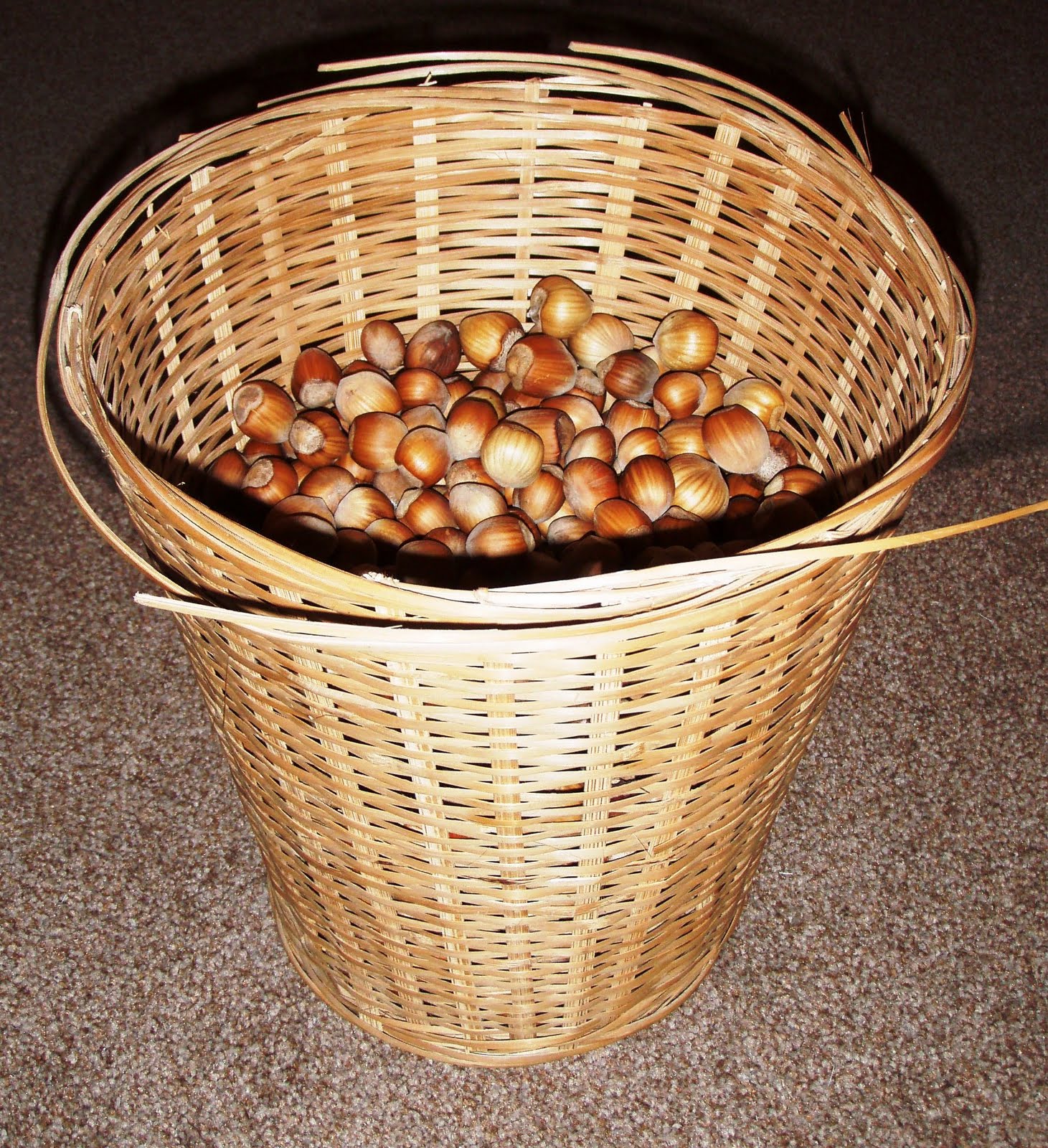
Last year I kept my little store in a wicker waste-paper basket in the airing cupboard, which dried them out nicely and they tasted great up until May when I finished them.

Don't Throw These Away


Thursday, 1 September 2011

Rotund Round-Up

We have just returned from a lovely holiday in Devon with apples on our minds as well as several bags full that we collected during our trip. I am planning some (entirely legitimate) scrumping trips this month, in association with my new friends at Transition but more details on that soon – Don’t touch that dial!
First Though, More Pears!
First though, a quick pear round-up; it has been a great year for all fruit and pears are no exception, with tree branches bowed under the weight of this fabulous bottom-heavy fruit.
High Fruit - No Problem
First we visited a tree situated on waste-ground in Portswood – this is a personal favourite of mine and last year we got a splendid yield from it. This year we were possibly a bit late and many of the lower fruit had already been taken but we soon had the extendable fruit picker in action plucking off the big boys at the higher reaches.
Actually Daddy, I Do Like Pears Now
My son previously professed not to like pears, despite being something of an apple fiend. After helping me fill the bucket though, my daughter and I eventually persuaded him to try one of our bulging beauties and he was soon converted.
About 10 Kgs
Next we zoomed off up to Pear-Tree Green and you don’t need to be a genius to work out what we were after there.
Walnuts and Pears You Plant For Your Heirs
First port of call was the lovely little tree planted by the city Mayor in 1951, which still produces a healthy crop of unusually small and round pears.

Thanks Mayor Cutler

These make excellent little snacks so we filled my daughter’s hat with some to take home and left loads to ripen further on the tree.
Always Bring Suitable Sun Protection - You Never Know When You Might Need It
Close by there is a pub – named The Pear Tree, and guess what grows in the pub garden?

What A Coincidence

This is a huge tree laden with huge pears and I’m sure that if someone asked the landlord/lady nicely, he or she would be happy if someone came to help pick the fruit. Who knows, it may even be possible to arrange some kind of beer fuelled pear picking party in their garden.
Big Pears on a Big Tree
Returning home with our boot full of fruit (we got about 10Kgs of pears this time), I remembered another very tasty pudding that the Head Chef had made previously – Chocolate Pear Upside-Down Cake!
Looks Good Enough To Eat, Doesn't It?
A great reward for the tired and hungry children, and let’s not forget the poor Urbane Forager; I am now in training and aiming to be in peak condition for the forthcoming season’s apple avalanche!
Also Likes Chocolate Cake Mixture
Related Articles...
Pudding
Chutney
Perry (Pear Cider)
Pirates

Saturday, 27 August 2011

In Praise of Crab Apples

While foraging about the place, I noted a lot of Crab Apple trees. I don’t know what the crop is normally like but they all seem heavily laden this season, so I think we should all try some experimentation with this very common native, but often neglected fruit. I would have thought that you could make Crab Apple Wine,  at the very least. I know that it is traditional to combine these baby apples with your apple crop when making cider.
When I was a young lad, we used them as weapons. There was a huge tree that we visited in the local woods. We would stab the apples onto the end of long, whippy sticks and then sling them ballistically (my spell checker wants to turn this into sadistically, which would also be true) at each other. We would return home later tired and bruised.
Anyway, enough history, I hunted for some recipes and this is what I turned up…

Crab Apple Chutney
Ingredients
2kg mix of crab or cooking apples peeled, cored and chopped into little cubes. Shopping list
450g brown sugar
2 onions
4tsp turmeric
20 cloves
500ml cider vinegar
2tsp chilli powder
2tsp salt
10cm ginger
How to make it
Place the apples in a heavy based saucepan stir in all other ingredients, cover and bring to the boil.
Reduce heat to low and stir chutney, be sure it doesn’t stick.
Cook uncovered for about 1 hr to 90 mins, depending on size of cubes, cooking apples will fall apart, crab apples won’t. Stir regularly, it will reduce and thicken.
Leave to cool completely then pour into sterilised jars and label.
Will give approx 12, 220ml jars. Keeps for up to 6 months, tastes best after first month.

Crab Apple Jelly
1. Wash the apples, removing any bruised fruit. Put in a saucepan; fill with water to just cover the apples.
2. Bring to the boil and simmer until the fruit is soft (about 30 minutes).
3. Pour the pulp into a jelly bag or several layers of muslin and let drip overnight into a pan. Do NOT squeeze the bag or it will make the juice cloudy.
4. The next day, measure the juice, and add sugar in the ratio of 10 parts juice to 7 of sugar. Add some lemon juice, bring to the boil, stirring to dissolve the sugar.
5. Keep at a rolling boil for 40 minutes, skimming off the froth. To test the set, chill a dessertspoon in the refrigerator.
6. When the jelly is set, it will solidify on the back of the spoon. Pour into warm, sterilised preserving jars and tightly seal while still slightly warm. Store in a cool dark place.

Chilli Crab Apple Jelly (Cottage Sm Holder)
Ingredients:
•600g of crab apples washed and chopped
•35g of medium red chilli peppers, washed and chopped with seeds in
•1 litre of water
•White granulated sugar - 500g to each 500ml of juice

Method:
1. Put the chopped crab apples and chillies in a large heavy bottomed saucepan.
2. Add 1 litre of water (they should just be floating). Bring to the boil and simmer until the crab apples soften and become pulpy (lid on). About 30-45 minutes.
3. Strain through a muslin square or jelly bag overnight.
4. Add the juice to a large heavy bottomed pan and add the sugar. Bring slowly to the boil, stirring to dissolve the sugar. When the juice and sugar has come to the boil remove from the heat and skim well. Return to the heat and bring to a rolling boil until setting point is reached. Aprox 15 minutes.
5. Skim and pour into warm sterilised jars.


Pickled Crab Apples
8 quarts crab apples
6 sticks cinnamon
1/4 cup whole cloves
1 quart vinegar
2-1/2 lbs sugar

1. Select apples of uniform size, wash and remove blossom ends, but do not pare.
2. Tie spices loosely in cheesecloth bag.
3. Mix vinegar and sugar, add spices and heat to boiling. Add apples and reheat mixture slowly to avoid bursting skins. Simmer until apples are tender.
4. Pack apples in sterile jars, cover with boiling vinegar syrup and seal.
Makes 10 pints.

Crab Apple Liqueur
4 quarts crab apples, washed, cored and quartered
4 cups sugar
3 cups vodka

1. Fill 1 (4-quart) mason jar with tight-fitting lid with prepared crab apples.
2. Add the 4 cups of sugar and three cups of vodka.
3. Store the jar on its side, turning once every day for 16 days to help the sugar to dissolve.
4. After 16 days, filter out the fruit bits and bottle.