Wednesday, 16 November 2011

Mansbridge Community Orchard Campaign #2

On my second visit I investigated the other side of the green, where I met Richard, a local man, in amongst the trees.
Richard said that people constantly moan about the economy but he has never seen anyone else (apart from me) picking the abundant free fruit available here. He has three small freezers in his flat – filled to the brim with stewed apples, blackberries and other fruit. He also makes jams, chutney, pies and anything else he can find recipes for.
Like myself, Richard had created his own fruit picking tool kit, he also advised me where another local walnut tree was - and a big cranberry bush.
In exchange, I shinned up the apple tree and dropped fruit down for him to catch until we had filled his bag up.
I then showed him the huge Comice Pears on a nearby tree.
So he helped me pick enough Sloes to make Sloe Wine and Sloe Gin.
Reciprocation, cooperation, teamwork, collaboration sharing community – call it what you will - it is always a potent thing.
If you are a mover or a shaker - please visit the new Campaign Page and get involved in the Campaign for a Community Orchard in Mansbridge.

Meddling with Medlars

My friend Alison kindly sent me this recipe for medlar jelly, she also took the lovely photographs to illustrate the process.
People have been eating medlars for a long time; Shakespeare said some fairly rude things about them, some people call them cat’s bottoms and others, worse things still but the end result here looks like bottled rubies.
Cat's Bottoms!
Here is Alison’s Medlar Jelly recipe...
1.      Pick the medlars when they are hard and store in a cool place for 2 - 3 weeks until soft (bletted).
When the Stored Medlars Change Colour, they are Bletted
2.      When your medlars are bletted gather a few more firm medlars to mix with them. This helps the jelly set.
3.      Cut the fruit into quarters and place in a large pan. Cover them with water and slowly bring to the boil. Cook for about 1 hour until the fruit is soft.
4.      Gently strain the fruit through a jelly bag. Do not squeeze the bag as this will make the jelly cloudy. Leave it overnight if necessary.
5.      Measure the juice back into a large pan and for each 600mls add 450 g of sugar. Bring slowly to a rolling boil and cook until jelly reaches setting point 220 - 222 degrees C.
6.      Remove scum with a spoon and pour into sterilised jars.
Ta Da! Like Bottled Rubies

Medlars are not very common and even less well know; I thought I had found some earlier this year but they turned out to be only some kind of small pear, they still tasted very good after they had changed colour though.
I must find out what they might have been...

Saturday, 12 November 2011

Unexpected Pleasures


Maiden Hair or Ginko

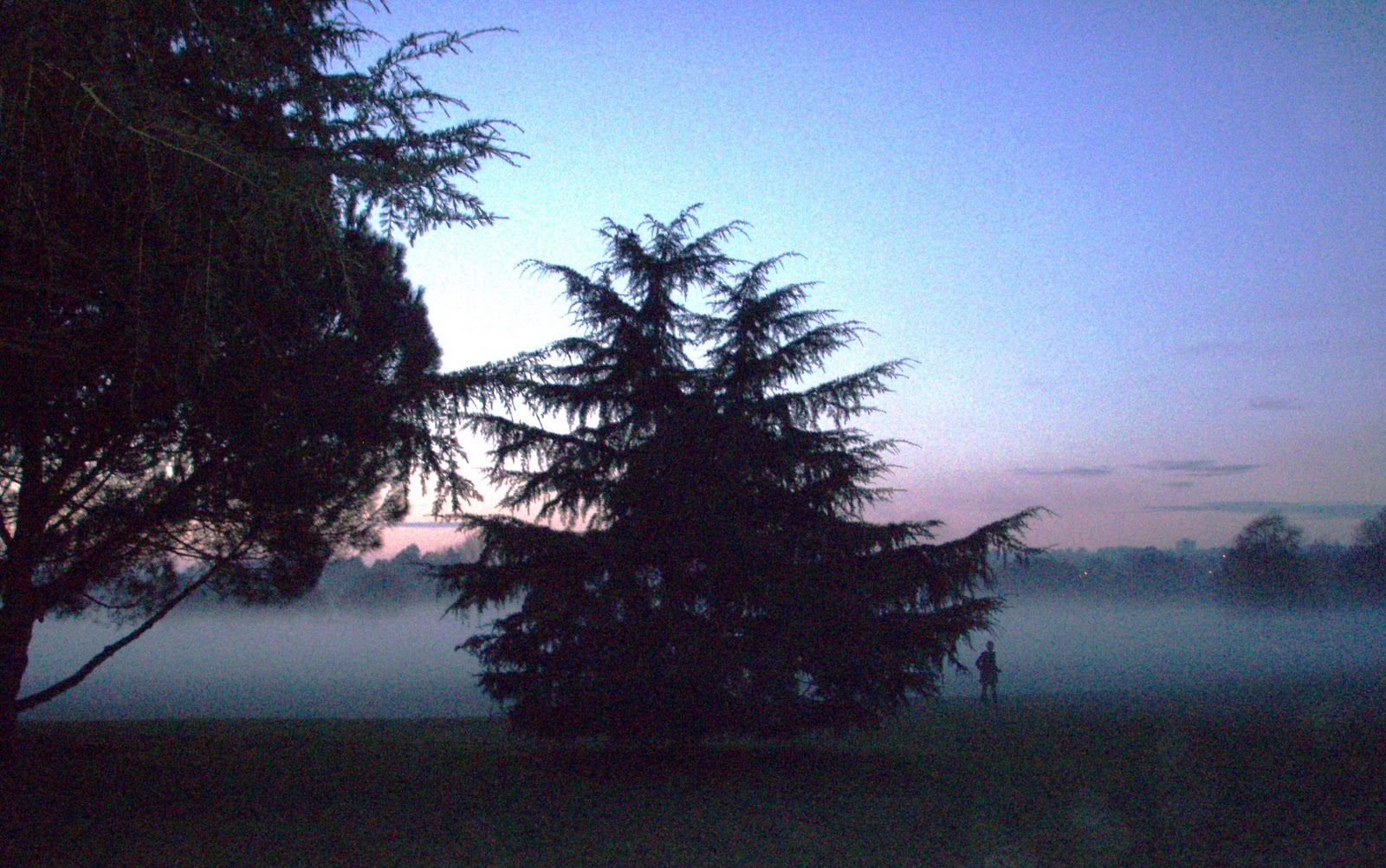
Many of our little adventures are planned in advance, this need to be because of time or rather the lack of it, but some of my favourite moments of discovery are completely unexpected; like the eerie fog that descended over the park as I cycled home from work last week.


Is That A Park Pixie Next To That Tree?
 
Today was another one of those days.

Quinces Outside the RSH

While my daughter was learning to dance, my son and I whizzed off to grab a bagful of quinces that I had spotted the night before outside the RSH hospital entrance.


Quinces Smell So Nice and Spicy
 
On the way down the road I spotted a lovely bunch of mistletoe growing on a small rowan tree in the verge in Highfield. We didn’t pick any (best to wait till nearer to Yule) but I took some fairly good pictures of it. 

Kiss Me Quickly! xxx

Mistletoe is a parasitic plant and often grows very high up but this bunch was set at about head height. Despite all the fecund associations the berries are poisonous, so don’t let any fall between your lips while you kiss.
Like Beautiful Little Oriental Fans
Further on in Portswood, we were brought up short by the startling colours of some yellow/green leaves of a Maiden Hair (or Ginko) tree.

Tasty Peartree Green Snack Pears

Later on we stopped off at Peartree Green to forage a few of the Mayor’s Pears to take home. As we drew up I noticed a large bird sitting in a tree.

Don't Blink, It's A Peregrine, I Think...

At first glance I thought it might be a fat Kestrel but on closer inspection (I had binoculars in the car) it revealed itself to be that speedy prince of prey, the Peregrine Falcon; I have seen one of these birds before but never in Southampton.
Yum!

Friday, 11 November 2011

Telegraph Hill/Woods

I recently took a short, damp November walk in Telegraph woods near Hedge End. I had not visited this place before but it is a very popular spot for dog walkers and nature enthusiasts alike. The most abundant animals I spotted though were grey squirrels, greedily gathering and burying acorns and chestnuts.
Watch Out For The Big Bad Wolf
Like a sinister illustration from a Hans Christian Anderson book, the first thing that strikes you as you enter these woods is that you are plunged into a twilight zone due to a stand of firs. These tall straight trees let through very little sun and this can look foreboding. However, the constant background drone of the M27 does tend to spoil the fairy-tale effect.
Coppiced Sweet Chestnut
The main path leads downhill and fairly soon breaks out into a sun-dappled grove of coppiced Sweet Chestnut trees. This is something that I have not come across before but I will definitely be back here next year to gather nuts, it really was an enchanting place. It was a bit late in the season for foraging these nuts and the recent wet weather had caused many of the nuts to begin sprouting shoots.
A Damp November Day
I was surprised to discover that there was an Iron Age hill fort in the area too, these structures have always held a fascination for me and I love to visit them whenever I can. Sadly my lunch hour did not permit further exploration, so I will have to report back at a later date on this very intriguing place.
Very Pretty Even On A Bleak Day
Beech, Holly, Chestnut, Oak and Fir

Tuesday, 8 November 2011

What Shall We Do During Winter?

Autumn is now well established and Winter is always a lean time for foraging, we have had our first frost and cold weather is clearly on its way. I have been wondering what to write about; obviously I want to keep you, dear readers, amused, entertained and even enthralled. So I thought I would ask you what you would like to see?
A Muddy/Icy Walk/Ride in Wickam
As a family we still get out and about a lot during the cold season and I still take lots of lovely pictures. I could for instance show you how I built the supersonic pallet sledge.
The Pallet Sledge, Out Slides Anything On The Slopes
I can report back on the success or otherwise of our various chutneys and wines. We can celebrate the Winter Solstice in style. I’m certain we can have a go at making Xmas decorations and wreaths.
Making Decorations Last Year
I have a great plan for Xmas sweet treats, which could also make nice presents. We can organise some wassailing activities in the Lost Orchard of Mansbridge. I could write a book/manual on Urbane Foraging, and publish it in time for next spring. Or maybe you have something you would like to ask/suggest?
Actually, if my plan for a Community Orchard goes according to design, there will be plenty for us all to get excited about...

Friday, 4 November 2011

Fruity Beauty

Yesterday I heard two articles on Radio 4 that caused me to stop and think about the implications of the Urbane Forager project, beyond my family sphere.
A Large, Misshapen Pear Yesterday
First, in a belated rear-guard action against fruity fascism, Waitrose supermarket is now selling weather damaged apples at a reduced cost. This rather strange phrase also applies to ugly or misshapen fruit, which somehow doesn't conform to the current warped ideal of Fruity Beauty.
All Different All Tasty
Well, here at the Urbane Forager we have long recognised the fact that fruit, like people, comes in many shapes, sizes, flavours and colours. The world is a richer place for this; there are over a thousand varieties of apples in the UK alone. Some of my favourite apples are knobbly, russety or possess unique profiles. A quick glance at any of my Usual Suspects or Apple Matrix pictures illustrates this fact. As a society, we should be concerned about waste and in the current financial climate individuals and industry should be reducing it as much as possible.
Don't Judge Us By Our Skin Colour
Thinking about saving money brings me to the second news item that came shortly afterward. Once again, an expert was stating that families apparently cannot afford to buy healthy food and somehow end up eating crisps and junk-food instead of fruit and vegetables. It doesn’t take a genius to spot that this is a matter of education, habit and culture rather than just money. Various people including the well-meaning Jamie Oliver have attempted to address this very serious issue.
Better Than Crisps
Take a brief look back over this year’s blog entries and see the vast amount of fruit and nuts that we have collected - over 200 Kgs of apples for starters – all for free and all from within the city environment. Of course it takes a certain amount of time and knowledge to locate and pick fruit and that is partly what the Urbane Forager project is all about, to demonstrate what can be achieved, if you want and if you can be bothered.
Loads of Free Apples
As an aside, I called the Soil Society to ask if I could define my foraged fruit and nuts as “Organic” and so arguably, healthier. From my interpretation of their definition, it seemed that I could. However, they were unable to give me an answer at the time and this seemed to be because I was eating, not selling the produce (so I wouldn't be wanting to pay the Soil Society any fees), they failed to call me back but in any case, it makes no difference.

Wednesday, 2 November 2011

The Lost Orchard Of Hedge End

When I wander around Hedge End during my lunch hours, I often locate new fruit trees.
Spring is the best time to find trees which may bear fruit later on. The blossom is beautiful and is associated deep within in our psyche with romance and rejuvenation.
I found an area in a local park that was quite literally swarming with apple trees. It must have once been an old farm orchard that has been forgotten. Last year I made quite a lot of cider out of these apples and kept loads for eating through the winter too.
Other people do use the trees that are near the carpark but my picker allows me to reach the higher fruits.
It’s great fun working out which apples are the tastiest and which will keep best during winter.
Generally, I find that the earlier fruits are softer and the later/hardest fruits keep best.
People often ask me if I know what the different varieties of apple are but I niether know nor really care. Maybe one day I will have enough free time to learn a bit more about naming the fruits but for now, I'm happy to locate, pick and use them. These are mostly eating apples.
There are a couple that look Russetty but they do not taste similar at all. Almost all of the fruits are good to eat.
These red / green stripy ones are the crunchy and sweet winners in my opinion. They also keep very well.
All of these different varieties of trees can be found in a public park within an area of about 100 meters. I'm pleased to see that other people do pick them a bit more now but there are a lot still left on the trees.