Showing posts sorted by relevance for query Sloes. Sort by date Show all posts

Friday, 21 October 2011

Sloe Business


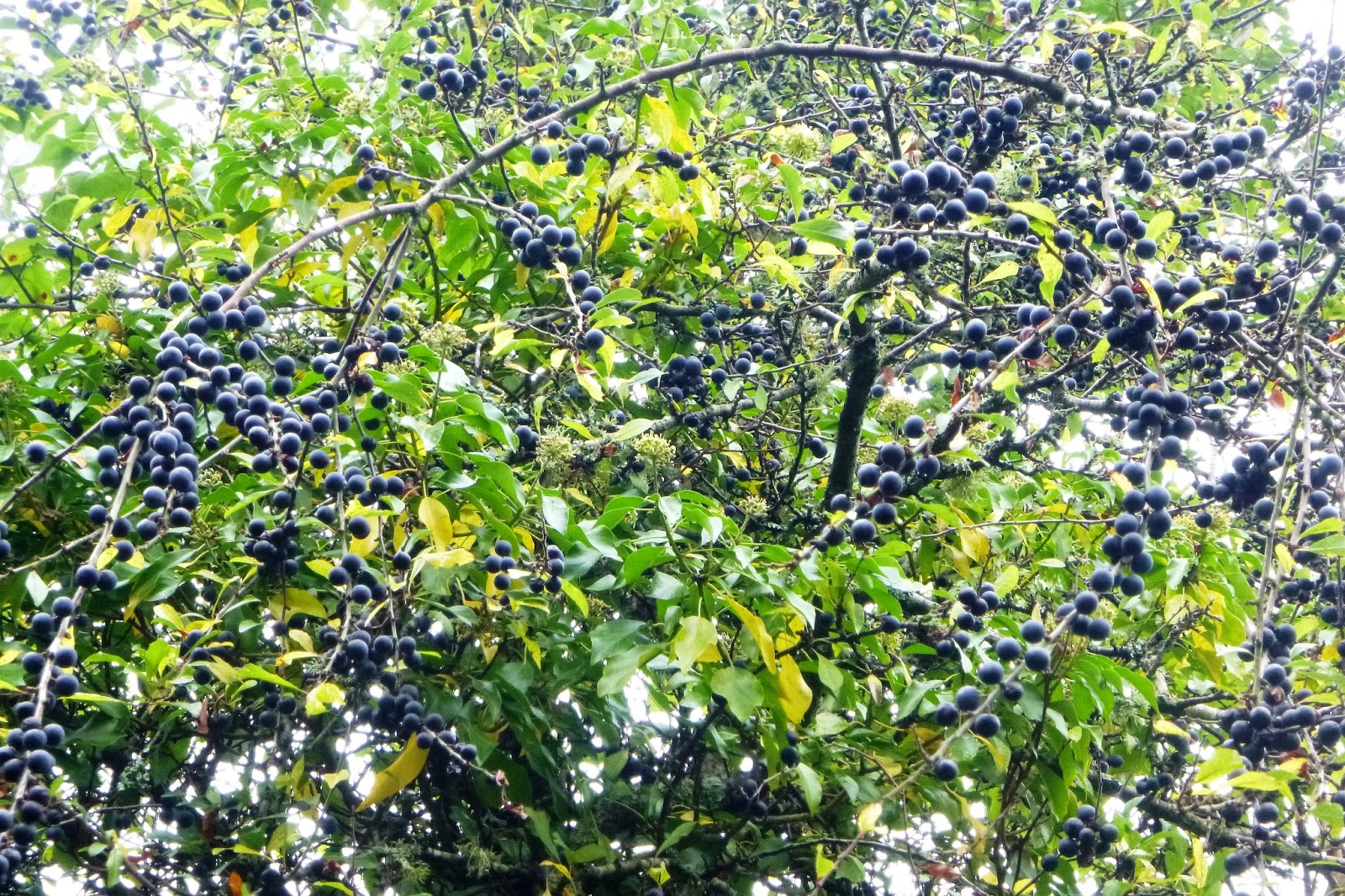
Sloes on a Blackthorn Bush

Sloes are currently everywhere in the hedgerows. I picked enough to make wine and gin in just half an hour. I wore my cycling gloves to allow faster picking with less pain.
Sloe Wine
It's Difficult to Photograph Wine Making and Make it Look Appealing
The sloes are immersed in boiling water with some raisins and then stirred each day for up to a week. After a couple of days the mixture turns a lovely thick deep red, this reminded me of making elderberry port but it did not require the lengthy boiling.

Especially When It Begins To Ferment
After a suitable period the previously activated yeast is added to the mix. It is then left in a warm place to get on with the process.
Time to Strain into a Demijon

Sloe Gin

There are lots of different recipes for Sloe Gin but the simplicity and cheek of this one (from Sloe.biz) appealed to me.
1.      Pick your sloes from blackthorn hedges in October or November when they are most ripe - probably after the first frosts.

Blue Black Beauties
2.      Take a litre bottle of gin, and drink half a litre.
Remove the Leaves Before Freezing

3.      Cut or prick the sloes and drop them into the half-empty bottle so that they displace the remaining gin to near the top.

4.      Add one wine goblet of sugar (approx 150g).
More Gin Required

5.       All you have to do now is turn or agitate the bottle daily for a week, then weekly for a month or two ... by which time it will be ready to drink (but it is really best kept until the next winter.
That Looks More Like It


Friday, 14 October 2011

Sloe, Sloe, Quince, Quince, Sloe

After the very successful Picknik #3, in the lovely churchyard of St Mary’s in Swathling, Gary (the vicar) asked if we would like to come and pick Quinces from the Vicarage garden. My only previous experience of these very traditional fruits was a jar of ancient quince jelly I found in the kitchen cupboard. It was made by my mum about ten years ago but my daughter would eat it with a spoon given half a chance.
A Japanese Quince On The Vicarage Tree
I wondered if there was any connection between the name of this fruit and the word quintessential but my learned friend Roy informs me that this word is derived from the fifth element – Earth, Water, Fire and Air being the first four. Of course, we know a little bit more about science these days but it is always good to bone up on your alchemical knowledge. 
A Quintet of Quintessential Quinces
I tried typing “turning quinces into gold” into a search engine and this turned up that the fragrant fruit was highly regarded by the Greeks. It was probably the golden apple that Paris gave to Aphrodite as a symbol of love. However, it goes on to describe their taste as astringent and gritty; I’m not quite sure what the romantic implications of that might be and I have no idea what Aphrodite did with her quince.
Cook Before Eating
Another traditional hedgerow berry that is currently available is the Sloe. Sloes are the blue, black fruit of the Blackthorn bush/tree, very common in hedges and very plentiful this year. Many people like to pick these bloomy boys to make Sloe Gin, in preparation for the Christmas and long winter nights. I have decided to attempt making Sloe wine this year, although if we have enough left over, I can think of no better excuse for buying a bottle of gin.
Sloes in September
Sloes are too dry and sour to eat off the bush (good for a dare though as my daughter will testify), but they taste lovely and plumy when preserved.  You can add flavour with orange zest, cloves, cinnamon or almond essence. Normally you pick them after the first frost as this helps the process. Alternatively, you can sling them in the freezer to cheat the seasons – especially as the winter seems a bit late this year.

Ripe Sloes in October

Tuesday, 1 December 2015

Sloe TV

It is that time of year again, when we start to think about gathering Sloes. In Celtic folklore, the Blackthorn occupies a dark and possibly even sinister area concerning Samhain (the precursor to Halloween), and facing your own mortality. Certainly, once the leaves come off the trees, they can have a somewhat foreboding skeletal look about them.
You can make many interesting things out of the wood of the Blackthorn tree but the most popular use for the Sloe Berry is deliciously plummy Sloe Gin. You should get your Sloe Gin started by mid November, if you want to have it ready in time for Xmas. It can make a very welcome gift, especially if you store it in decorative bottles. Lore states that you should ideally wait until the first frost, before you pick them (alternatively, sling them in the freezer). After this these highly astringent fruits apparently ripen and taste sweeter.
Obviously, the name of the Blackthorn contains a barely veiled warning, it can be a prickly business, but picking these bloomy blue/black babies brings its own reward. To make Sloe Gin, simply immerse your Sloes in Gin, add some sugar, to help bring out the juice. Leave the mixture to steep for at least a month giving the jar a regular shake (every day for the first week, then every week for the following month or so). Some people recommend piercing the sloes with a thorn first but my experimentation has shown this to be unnecessary. 
I picked mine during lunch-time walks and ferried them home each day in my sandwich box. I already knew where the bushes were because I had spotted to Blackthorn blossom in the hedgerows in March. I filled a large Kilner-jar with berries and then topped it up with gin and a little sugar. I taste it regularly, just to check, then filter off the debris before decanting it into bottles. All that is then required are some decorative labels.
To get a bit more product from your efforts, another top tip, is to reuse the gin soaked sloes by pouring red wine over them, I'm using Elderberry Port from 2013). Leaving them to soak further, produces a fortified wine, ideal for the winter months. I like experimenting, and can't see any good reason for not giving this a go. I then intend to take this a stage further by using the resultant brew to make mulled wine!

Don't forget to put, the Urbane Forager book on your Christmas present list. 
Order your copy now!
You can buy this lovely book for your friends and family from all good book-stores or Amazon.
Author: Alan Gibson
ISBN: 978-1-78507-300-7

The best Urbane Forager images are now on Pinterest. Please follow & share.

Thursday, 28 November 2013

Sloe Motion


These May Actually be Tiny Damsons but they are Related and Will Do
When the first frosts of November arrive, we all start digging out the warm clothing and Winter gloves. Around this time, my mind also turns to toward the bountiful Blackthorn bush. It has been a prodigious Autumnal harvest for most fruit and nuts this year and Sloes have been no exception; they seem to be everywhere you look.
These are Definitely Sloes
Blackthorn provides us with two chief pleasures; in Spring, it is one of the first trees to blossom, smothering the hedgerows with its pretty white bloom. It flowers along with its close relative, the plum and proclaims the seasonal change. Then, as Winter approaches, we benefit from its late fruit, Sloes.
Blue Black Bloom
Tradition has it that the Sloes should be picked after the first frost. I normally wear cycling gloves, to save my fingers from the prickly thorns and purple stains, as much as the chilly air. The most popular pastime with this fruit is to make Sloe Gin, a tasty, plummy nip for those cold Winter nights.
Sloe Wine Fermenting
I picked so many juicy beauties that I had enough to make a bonus gallon of Sloe wine, but Sloe Gin is always the blue/black jewel in November’s crown. This seasonal drink can make a delicious Christmas gift; in a small, decorative bottle. Alternatively a small glass can be the perfect companion to a platter of cheese and biscuits, maybe accompanied by tangy home-made chutney and a few slices of apple…
Sloe Gin Infusing
Someone turn the TV on and ring for the butler!

Saturday, 10 September 2011

Picknik #1

Today at noon we met on Southampton Little Common, for the first of our Urbane Forager “Pickniks”.

Let's Get Picking!
We had around 10 people turn up, including friends, children and some folk from the Transition Network. A fairly large branch had been broken off the tree by inconsiderate pickers beforehand, so we knew we had to be careful.
The Apples Soon Start Building Up
The big apple tree was loaded with fat, rosy fruit high up in the canopy but all the lower ones had been taken. Fortunately we were well equipped with apple pickers and some great children, who could climb like monkeys.
Someone Call Monkey World
The weather held out, despite reports of heavy rain, so we started collecting the lovely big apples. After a good load of fruit had accumulated, we had a short break for our picnic but the kids were soon gagging to get back up the tree.
More Challenging Than a Climbing Frame
Everyone filled their bags and baskets and I filled my builder’s buckets with 45Kgs of the best ones I could get my paws on, some of them were huge. We should have enough to store plenty and still have some left for cider making.
Nice Picker Action
As we left, other people were arriving to pick more fruit and there was plenty still left on the tree.
It's a Hand Picked Whopper
Word of the Urbane Forager must be spreading because a woman came up to me as we were leaving and asked where she might find Sloes and Blackberries on the common. I pointed out that it was still a tad early yet for sloes but blackberries can be found all over the place.
Look, No Hands
Traditionally, you pick sloes (to make Sloe Gin amongst other things) after the first frost, so lots of time to hunt them down. However, if you really can’t wait, you can cheat, by picking them early and sticking them through the freezer...
Sorted!
Looking Forward To Picknik #2 Next Weekend

Wednesday, 22 March 2017

Everything's Gone Green

Plum
The observant amongst you will have noticed that the countryside and even the city parks and roadsides are changing colour. The Plum blossom is floating like fluffy white clouds along the hedgerows; there's plenty of it and it looks like it will be a very good year for plums. 
Plum
So, if anyone has a good proposition for what we can use the bucket loads of fruit that we will get, come July, we want to hear about it please.
Plum
Blackthorn is also beginning to bloom too and these flowers are similar to the plum, the fruits (Sloes) are also related, although you might not want to eat Sloes straight off the tree! It looks as if it will be a good year for Sloes too, judging by the scale of the current bloom (provided the weather is not too stromy).
Blackthorn
People have often asked me to differentiate these two blossoms and so I am posting lots of images here to help you distinguish one from the other.
Blackthorn
The most obvious thing to spot is that the Blackthorn has large black thorns all along the branches. If at first you do not notice these, you soon will, if you put your hand in amongst the flowers.
Blackthorn
The Blackthorn has smaller, clumped flowers fizzing along the branches; it tends to be a smaller tree, often looking more like a bush. Whereas the Plum will grow into a medium sized tree.
Small Plum Tree
I say Cherry Plum but the blossom will be very similar on trees that will grow Mirrabells, Greengage, Damson, Bullace as well as plain Plums.
Big Plum Tree
Hawthorn is also adding a green tinge to the woodland fringes at the moment. The fruit and leaves of this tree are also largely edible, if you ever feel slightly peckish on a wander.
Hawthorn, just as prickly as Blackthorn
The next thing to keep your eyes peeled for will be Ransoms, Wild Garlic Bluebells & Cherry blossom. Personally, I will be looking forward to the launch of Printemps, the Unity Brewing Co. Spring seasonal beer, created in collaboration with the Urbane Forager Project using locally foraged Stinging Nettle tips.

Thursday, 14 January 2016

11¾ things to do before you're 50

This blog tends to focus on family activities, but that's because we have children. Obviously, there's no reason why singletons and couples cannot enjoy all the things we do too. Every now and then I think, why should the kids have all the fun? What about the hard working adults? Clearly, they deserve to enjoy themselves too.
With this in mind, I thought I would publish the Urbane Forager's guide to the 11¾ things to do before you're 50! Needless to say, you can still do them if you are older than 50.
For any children reading this, the before you're 50 bit means that you can help your parent's in the identification, mapping, picking and preparation of these various concoctions, the alchemy of fermentation is a fascinating science lesson. However, you should not try drinking alcohol until you are old enough; you would most likely think it tasted horrible anyway.
1. Notice the first blossom of the year in the hedgerows, this will be the Blackthorn (Sloes) and Plum trees, remember where it is and add the locations to the Falling Fruit map. Check back later to pick the fruit. Plums ripen around June/July but you will need to be much more patient with the Sloes.
2. Make Elderflower Champagne, cordial is a big favourite for the children too. The Elder bushes herald the onset of Summer around May/June, depending on global warming. Remember to use pressure-safe bottles! Also, remember where the bushes are and return later in the Summer for Elderberries.
3. Pick and eat Cherries straight off a tree. What could be better? Spot the Cherry blossom when it arrives after the Plum and Blackthorn, record the location on the Falling Fruit map. Cherries will be the first fruit to ripen in the UK and you will need to be quick because the birds like them too!

4. Observe Apple and Pear blossom while the Cherry blossom is turning into immature fruit. Note the locations on the Falling fruit map (can you detect a theme building here?). Nothing beats climbing up and picking Apples fresh from the trees; they obviously make the most delicious and healthy snacks and will keep for months. You can also press the apples into  the best tasting juice or turn it into gallons of cider for virtually no cost whatsoever.
5. Have a competition to see who can pick the most Blackberries. Blackberries grow almost everywhere but it's nice to get out of the city if you can. Everyone can stuff there juice smeared faces with fabulous fruit and when you return you can freeze the remainder or use them to make fantastic vodka and gin based liquors, fabulous to break out later on after a Summer BBQ.

6. Find a Mulberry tree, if you cannot find one, plant one. I try not to tell anyone where my favourite Mulberry trees are; it's good to keep some tree locations secret. The kids go crazy over this sweet sticky fruit and I always Mulberry Gin (can you see another theme developing) along with various puddings. I still have some in the freezer...

7. Make Elderberry wine. The berries will be abundant around August and making this archaic and intoxicating brew is a very simple and satisfying process; you can watch it bubbling away and then save it until it matures. I always use some to make bottles Mulled wine around Christmas, always a good thing to take to parties, along with the mince pies.
8. Find a Walnut tree; there's bound to be some somewhere in your vicinity. Walnuts ripen along with Hazelnuts around September but you can pick exotic smelling Green Walnuts earlier (in June) if you want to try pickling, making Schnapps or Vin de Noix.

9. Gather a great load of big, fat Chestnuts and roast them over a fire, we use a BBQ or chimenia because of our small garden. It's a great way to warm up and celebrate Autumn. Also roast Chestnuts make an ideal accompaniment to fireworks on Guy Fawkes Night. Don't forget to prick them first!

10. Make Sloe Gin. A very simple process, resulting in a fantastically plummy tasting liquor that is just the ticket for those chilly, dark Winter nights and also make the perfect Christmas gift for family and friends.
11. Bring the love into your house! Find and cut a big bunch of Mistletoe. Actually, it is easy to find and more complicated/dangerous to collect but with a little ingenuity and improvisation it is possible. Your loved ones will hopefully be delighted and you can give some to friends and neighbours too.

¾. Upcycle the left-over gin-soaked Sloes that you used to make your Sloe gin (10) use some to spice up your Mulled Elderberry (7) wine or to include in your home-made Christmas Plum (1) pudding.

Monday, 17 August 2026

Resilience in the Face of Drought Conditions

Farmer's Under Pressure Harvesting at Night.

Man-made Climate Change is undeniably upon us, and the evidence is easy to find. It's not just a hot summer, it's significant change. This is now, finally, being treated as a serious threat to national security. Only time will tell if the governments are acting quickly enough. I am compiling a page for reliable information, including help and support for Climate Anxiety (see below).

Hosepipe Ban and Empty Water Butts

At home, we should be thinking about our own resilience, and water butts are a good place to start, especially during a hosepipe ban. Naturally we should all be preserving water and not wasting it, there are multiple ways to do this. On a basic level you can make simple choices such as, should I wash my car or water my garden? We also save all our washing up water in buckets, to use on the garden.

Beautiful Free Blackberries

Fortunately there are still plenty of juicy, free Blackberries to pick and eat. It's a joyful activity to get on a bicycle, pedal to a local hedgerow, and fill your Tupperware boxes for later, whilst scoffing as many as you reasonably can - that's what I call living in the moment.
Blackthorn Early 

I recently spotted a tree, full of early Sloes, the fruit of the Blackthorn tree, I noticed them partly because they were unexpected but because they were very large. Anyway, as a forager, you need to be opportunistic, so I picked a bag-full and will make Sloe Gin early this year. Traditionally, you should pick after the first frost of the year, but that seems a long way off at the moment and sticking them in the freezer will perform the same job.

Big Fat Sloes

Earlier this year I thought about growing squash upward, they tend to take up loads of space, plus I'm only designated a small space in our garden veg patch. I got some 5m bamboo branches from a friend's garden and began to create a rather Heath Robinson trellis and frame contraption for the plants to grow up. With a little encouragement they seemed to enjoy their elevated position and some fruits are now forming. However, I need to keep watering regularly.

Squash and Cucumber Growing Up 

I was concerned that the watering cans were not penetrating the parched ground and was evaporating too soon. I laid a sheet of cardboard over to suppress weeds and cut holes for the plants. I then got a couple of used 2 Litre milk bottles, perforated the base a bit and buried them in the ground up to their necks. I can now unscrew the caps and fill them from my watering can ensuring that the water is deeper in the ground and less likely to evaporate in the burning sun. The next time I do this, I will make smaller perforations to slow the water dispersal, like gardening, it's mostly trial and error.


Thinking ahead to Autumn (some trees are so stressed by lack of water they are already shedding leaves), I checked out a Walnut tree and spotted Green Walnuts. Some people like to make Green Walnut pickles, I tried this once but it's quite a process. I really like the spicy smell of green walnuts but leave them to lose their husks and mature in to Walnuts, which can be kept easily for later use over Winter.

Green Walnuts


Man made Climate Change is now a fact of life and the more you know about the facts, the more terrifying it can feel. Even if it can feel daunting as an individual, knowledge is better than ignorance. Denial is a knee jerk reaction for some, either because they feel helpless to change the situation in any significant way or simply because they have not been furnished with facts. However, talking with like minded people can help and reassure you that you are not alone. Taking positive action in groups can also help, such as signing well thought out and managed petitions can force even governments to listen to your fears and feelings. It is through our large institutions that we can affect significant change.