Showing posts with label sloe wine. Show all posts

Tuesday, 1 December 2015

Sloe TV

It is that time of year again, when we start to think about gathering Sloes. In Celtic folklore, the Blackthorn occupies a dark and possibly even sinister area concerning Samhain (the precursor to Halloween), and facing your own mortality. Certainly, once the leaves come off the trees, they can have a somewhat foreboding skeletal look about them.
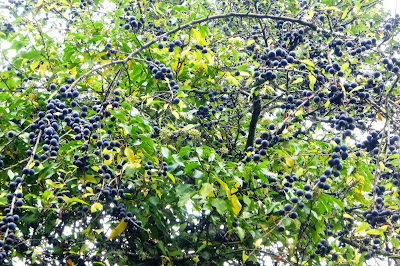
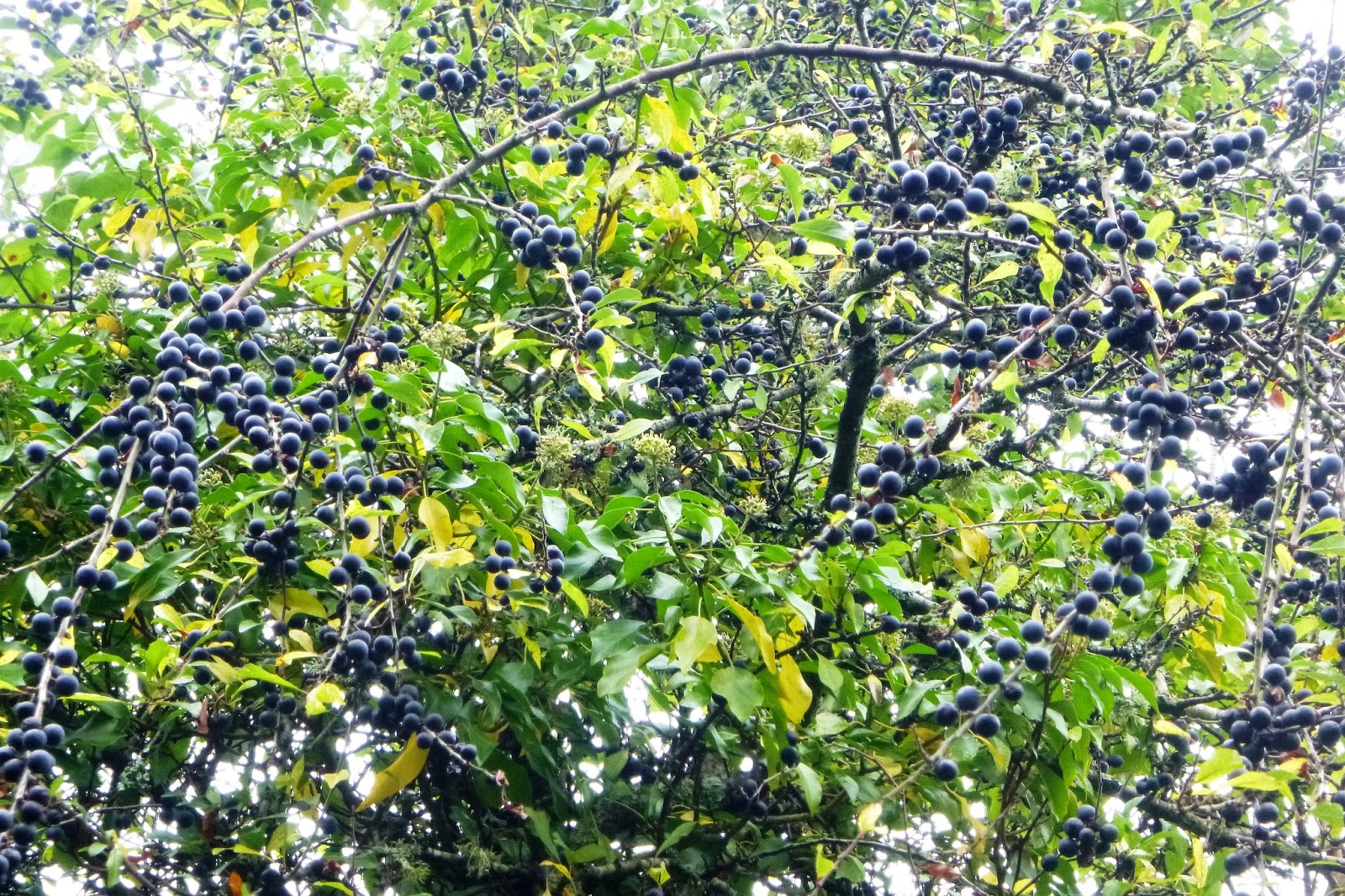
You can make many interesting things out of the wood of the Blackthorn tree but the most popular use for the Sloe Berry is deliciously plummy Sloe Gin. You should get your Sloe Gin started by mid November, if you want to have it ready in time for Xmas. It can make a very welcome gift, especially if you store it in decorative bottles. Lore states that you should ideally wait until the first frost, before you pick them (alternatively, sling them in the freezer). After this these highly astringent fruits apparently ripen and taste sweeter.
Obviously, the name of the Blackthorn contains a barely veiled warning, it can be a prickly business, but picking these bloomy blue/black babies brings its own reward. To make Sloe Gin, simply immerse your Sloes in Gin, add some sugar, to help bring out the juice. Leave the mixture to steep for at least a month giving the jar a regular shake (every day for the first week, then every week for the following month or so). Some people recommend piercing the sloes with a thorn first but my experimentation has shown this to be unnecessary. 
I picked mine during lunch-time walks and ferried them home each day in my sandwich box. I already knew where the bushes were because I had spotted to Blackthorn blossom in the hedgerows in March. I filled a large Kilner-jar with berries and then topped it up with gin and a little sugar. I taste it regularly, just to check, then filter off the debris before decanting it into bottles. All that is then required are some decorative labels.
To get a bit more product from your efforts, another top tip, is to reuse the gin soaked sloes by pouring red wine over them, I'm using Elderberry Port from 2013). Leaving them to soak further, produces a fortified wine, ideal for the winter months. I like experimenting, and can't see any good reason for not giving this a go. I then intend to take this a stage further by using the resultant brew to make mulled wine!

Don't forget to put, the Urbane Forager book on your Christmas present list. 
Order your copy now!
You can buy this lovely book for your friends and family from all good book-stores or Amazon.
Author: Alan Gibson
ISBN: 978-1-78507-300-7

The best Urbane Forager images are now on Pinterest. Please follow & share.

Thursday, 9 January 2014

Winter Warmers

Happy New Year Readers.
Lighting Over the Itchen River
The weather here has been relentless and unforgiving; we did manage to enjoy the storms in Devon after Xmas but beyond this we have been largely confined to quarters.
A Huge Beech Tree - Blown Down on Cheesefoot Head
After bottling up another batch of Elderberry Port, and with Sloe and Medlar wine currently on the go, I took the opportunity to test some of the adult drinks we had created this year.
Storm Waves in Hope Cove
Here then, is a quick round up of the fruity flavours that I have experimented with over the last year.
Elderberry Port, Medlar & Sloe Wine, Cider
  •       Elderflower Champagne. It took two attempts and some exciting explosions but we had great results in the end. Lessons learned for next Spring/Summer. Plenty of Elderflower Cordial to keep the kids happy throughout the year.
  •       Mulberry Gin. Definitely dangerously delicious! I had to fight the children for the Mulberries.
  •       Blackberry Vodka. What’s not to like?
  •       Raspberry Vodka. A nice contrasting compliment to the other fruit liquors .
  •       Cherry Brandy. I think this still needs some tweaking or perhaps I just don’t like it very much.
  •       Cider. 11 Gallons this Autumn and it tastes much nicer than last year. We will be made some Mulled Cider and mince pies for Christmas parties. Lots of Apple Juice for the children too; I think pasteurisation may be called for next time.
  •       Medlar Wine.  Currently bubbling away nicely, last year’s batch is not bad at all.
    Medlar Wine 2012 Vintage
  •       Elderberry Port. Recently bottled, very successful in previous years.
  •       Sloe wine, still busy fermenting in the demi-jon.
  •       Sloe Gin, a plummy favourite that makes a popular gift. Also a great nip for those cold winter nights.


Thursday, 28 November 2013

Sloe Motion


These May Actually be Tiny Damsons but they are Related and Will Do
When the first frosts of November arrive, we all start digging out the warm clothing and Winter gloves. Around this time, my mind also turns to toward the bountiful Blackthorn bush. It has been a prodigious Autumnal harvest for most fruit and nuts this year and Sloes have been no exception; they seem to be everywhere you look.
These are Definitely Sloes
Blackthorn provides us with two chief pleasures; in Spring, it is one of the first trees to blossom, smothering the hedgerows with its pretty white bloom. It flowers along with its close relative, the plum and proclaims the seasonal change. Then, as Winter approaches, we benefit from its late fruit, Sloes.
Blue Black Bloom
Tradition has it that the Sloes should be picked after the first frost. I normally wear cycling gloves, to save my fingers from the prickly thorns and purple stains, as much as the chilly air. The most popular pastime with this fruit is to make Sloe Gin, a tasty, plummy nip for those cold Winter nights.
Sloe Wine Fermenting
I picked so many juicy beauties that I had enough to make a bonus gallon of Sloe wine, but Sloe Gin is always the blue/black jewel in November’s crown. This seasonal drink can make a delicious Christmas gift; in a small, decorative bottle. Alternatively a small glass can be the perfect companion to a platter of cheese and biscuits, maybe accompanied by tangy home-made chutney and a few slices of apple…
Sloe Gin Infusing
Someone turn the TV on and ring for the butler!

Friday, 21 October 2011

Sloe Business


Sloes on a Blackthorn Bush

Sloes are currently everywhere in the hedgerows. I picked enough to make wine and gin in just half an hour. I wore my cycling gloves to allow faster picking with less pain.
Sloe Wine
It's Difficult to Photograph Wine Making and Make it Look Appealing
The sloes are immersed in boiling water with some raisins and then stirred each day for up to a week. After a couple of days the mixture turns a lovely thick deep red, this reminded me of making elderberry port but it did not require the lengthy boiling.

Especially When It Begins To Ferment
After a suitable period the previously activated yeast is added to the mix. It is then left in a warm place to get on with the process.
Time to Strain into a Demijon

Sloe Gin

There are lots of different recipes for Sloe Gin but the simplicity and cheek of this one (from Sloe.biz) appealed to me.
1.      Pick your sloes from blackthorn hedges in October or November when they are most ripe - probably after the first frosts.

Blue Black Beauties
2.      Take a litre bottle of gin, and drink half a litre.
Remove the Leaves Before Freezing

3.      Cut or prick the sloes and drop them into the half-empty bottle so that they displace the remaining gin to near the top.

4.      Add one wine goblet of sugar (approx 150g).
More Gin Required

5.       All you have to do now is turn or agitate the bottle daily for a week, then weekly for a month or two ... by which time it will be ready to drink (but it is really best kept until the next winter.
That Looks More Like It


Friday, 14 October 2011

Sloe, Sloe, Quince, Quince, Sloe

After the very successful Picknik #3, in the lovely churchyard of St Mary’s in Swathling, Gary (the vicar) asked if we would like to come and pick Quinces from the Vicarage garden. My only previous experience of these very traditional fruits was a jar of ancient quince jelly I found in the kitchen cupboard. It was made by my mum about ten years ago but my daughter would eat it with a spoon given half a chance.
A Japanese Quince On The Vicarage Tree
I wondered if there was any connection between the name of this fruit and the word quintessential but my learned friend Roy informs me that this word is derived from the fifth element – Earth, Water, Fire and Air being the first four. Of course, we know a little bit more about science these days but it is always good to bone up on your alchemical knowledge. 
A Quintet of Quintessential Quinces
I tried typing “turning quinces into gold” into a search engine and this turned up that the fragrant fruit was highly regarded by the Greeks. It was probably the golden apple that Paris gave to Aphrodite as a symbol of love. However, it goes on to describe their taste as astringent and gritty; I’m not quite sure what the romantic implications of that might be and I have no idea what Aphrodite did with her quince.
Cook Before Eating
Another traditional hedgerow berry that is currently available is the Sloe. Sloes are the blue, black fruit of the Blackthorn bush/tree, very common in hedges and very plentiful this year. Many people like to pick these bloomy boys to make Sloe Gin, in preparation for the Christmas and long winter nights. I have decided to attempt making Sloe wine this year, although if we have enough left over, I can think of no better excuse for buying a bottle of gin.
Sloes in September
Sloes are too dry and sour to eat off the bush (good for a dare though as my daughter will testify), but they taste lovely and plumy when preserved.  You can add flavour with orange zest, cloves, cinnamon or almond essence. Normally you pick them after the first frost as this helps the process. Alternatively, you can sling them in the freezer to cheat the seasons – especially as the winter seems a bit late this year.

Ripe Sloes in October

Autumn Abridged

When we have an Indian summer, autumn seems to be brief but beautiful. This is especially true if there has been more sunshine than rain, which turns the golden leaves into an inevitable muddy pulp.

Lots of Lovely Leaves

We always enjoy this time of year; both our children have their birthdays in this season and we all like to get outdoors for long chilly walks. A favourite place of mine is Rufus Stone in the New Forest, where towering beech trees shed their bronzed leaves on top of the ancient mossy floor. Some of these wizened trees may even have witnessed the death of King Rufus (William 2), his breast pierced by an arrow as he hunted deer near this spot.
 
Rufus Stone - Stunning Beech Trees
Just Imagine How Big That Fallen Giant Was


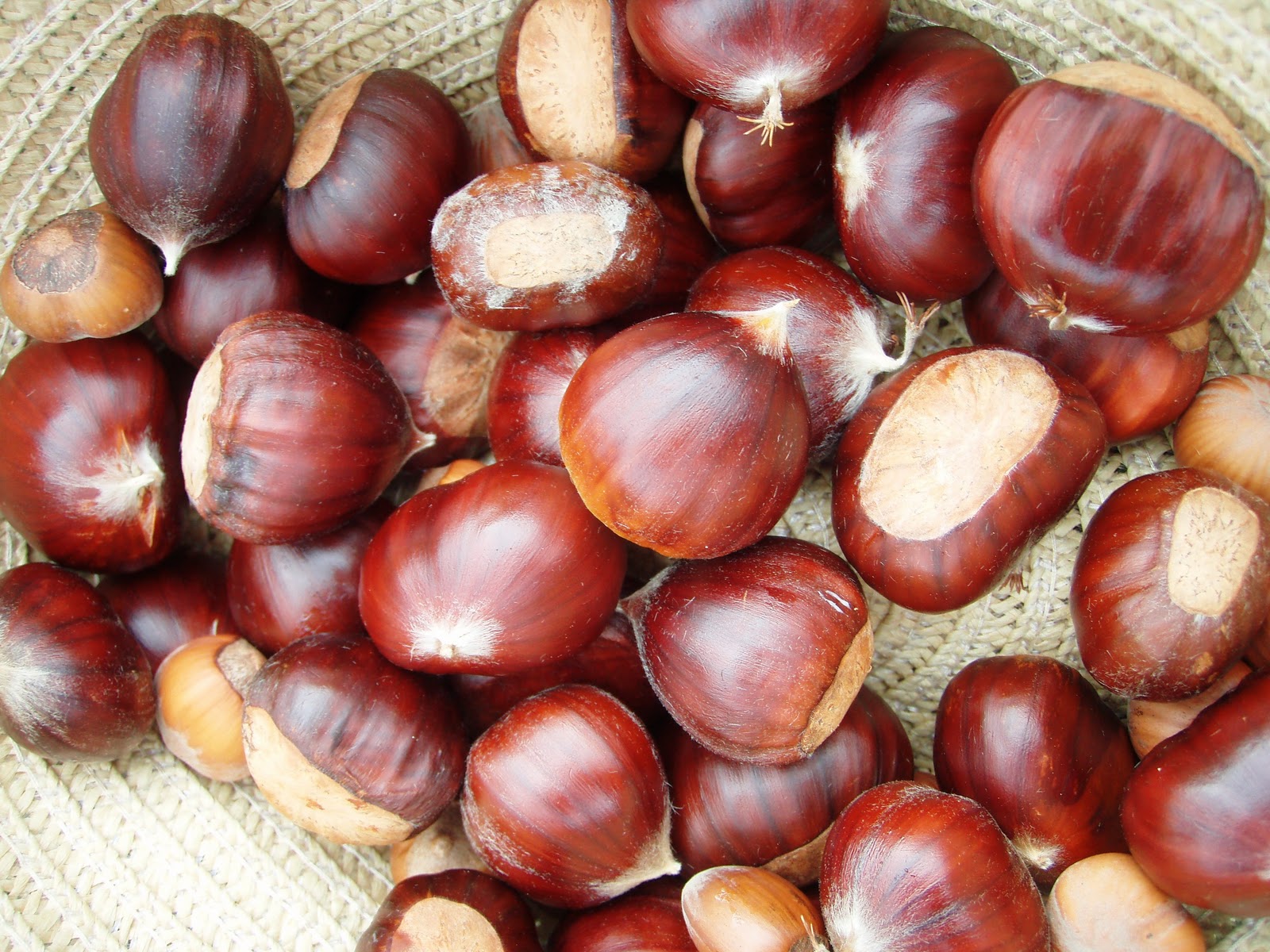
·         Chestnuts – Still falling in some places but the season will be short this year. Roast them in the oven or better still on an open fire. Chestnuts don’t keep well unless you freeze them. Don’t forget to slit the skins first.


Chestnuts

·         Apples – Some still on the trees. Later, more firm varieties will keep better through the winter. Store un-bruised, firm apples in a cool place like a shed or outhouse; they must be kept not touching. Wrapping them with newspaper in greengrocers boxes will suffice. Some varieties will keep through winter. Eat/cook the softer earlier fruit first. Turning them into cider preserves them well – until you drink it…

The Hedge End Hidden Orchard Apple Matrix

·         Pears – Mostly finished now. Pears do not keep as well as apples, although I still have a few which taste good. It’s normally best to bottle or stew pears – or turn them into perry.

A Bucket Full of Itchen River Pears

·         Walnuts – Last year we got 16 Kgs but we were not so lucky this year. You need to be on your toes as they tend to drop all at once and children love collecting them off the streets. They will keep well, as long as you make sure they are kept dry. Hang them in string bags or nets to allow ventilation.

Let's Get Cracking

·         Hazelnuts – We had a huge amount this year, thanks to the timely intervention of a storm. Hazelnuts keep well, if dried thoroughly and stored in a similar way to walnuts.

Nuts Oh Hazelnuts!

·         Blackberries – Lore has it that you should never pick blackberries after the feast of St. Michaelmas (29th of September). This is because the Devil has spat on them! Apparently, when St Michael cast Lucifer down, he landed in a bramble bush, which scratched him (as they do) he was so cross that he cursed, stamped and spat on them. Traditionally you can eat a goose on this day instead and maybe stuff it with your freshly picked chestnuts.

Darn Those Brambles

·         Quince – I have included this golden apple because the kind Vicar of Swaythling Parish invited us to gather the remainder from his garden. We will be donating them to Grandma I expect, who will turn them into something tasty soon.
Quintessential Quinces
·         Sloes – Traditionally, you pick these after the first frost; so I’m saving them for my winter section. Otherwise I will have very little to talk about…
Slow Down