Showing posts with label Medlar Wine. Show all posts

Thursday, 9 January 2014

Winter Warmers

Happy New Year Readers.
Lighting Over the Itchen River
The weather here has been relentless and unforgiving; we did manage to enjoy the storms in Devon after Xmas but beyond this we have been largely confined to quarters.
A Huge Beech Tree - Blown Down on Cheesefoot Head
After bottling up another batch of Elderberry Port, and with Sloe and Medlar wine currently on the go, I took the opportunity to test some of the adult drinks we had created this year.
Storm Waves in Hope Cove
Here then, is a quick round up of the fruity flavours that I have experimented with over the last year.
Elderberry Port, Medlar & Sloe Wine, Cider
  •       Elderflower Champagne. It took two attempts and some exciting explosions but we had great results in the end. Lessons learned for next Spring/Summer. Plenty of Elderflower Cordial to keep the kids happy throughout the year.
  •       Mulberry Gin. Definitely dangerously delicious! I had to fight the children for the Mulberries.
  •       Blackberry Vodka. What’s not to like?
  •       Raspberry Vodka. A nice contrasting compliment to the other fruit liquors .
  •       Cherry Brandy. I think this still needs some tweaking or perhaps I just don’t like it very much.
  •       Cider. 11 Gallons this Autumn and it tastes much nicer than last year. We will be made some Mulled Cider and mince pies for Christmas parties. Lots of Apple Juice for the children too; I think pasteurisation may be called for next time.
  •       Medlar Wine.  Currently bubbling away nicely, last year’s batch is not bad at all.
    Medlar Wine 2012 Vintage
  •       Elderberry Port. Recently bottled, very successful in previous years.
  •       Sloe wine, still busy fermenting in the demi-jon.
  •       Sloe Gin, a plummy favourite that makes a popular gift. Also a great nip for those cold winter nights.


Saturday, 1 December 2012

Delightful (Home-Made) Drinks

The British Government has made a proposal for minimum unit prices on alcohol. This legislation is not about abstinence but is designed to turn the tide on the reckless drinking culture that exists in some groups of people, for health reasons. Although this regulation is not designed to punish responsible drinkers, a new era of prohibition might persuade more people to try home brewing and start making their own country wines.
I have experimented, with making my own wine, beer and cider for many years; like a young boy with a chemistry set, I relish the alchemy of it all. So, I thought it would be useful to create a simple guide here, to show how easy it is to accomplish and also how entertaining it can be.
Cost-wise, there are obvious clear savings to be made; a basic starter kit is inexpensive and much of it can be found for free or will be available from your local recycling centre / Freecycle site. Always make sure all equipment is Food Safe.
Essential Kit List...
You may want to buy an inexpensive hydrometer, although this is not actually necessary, it does give you more control over the flavour and alcoholic content of your hooch.
A full demijohn will produce one gallon of wine, which amounts to about six bottles. However, as with home baking, producing your own drinks is not only about saving money, I simply enjoy the process. You will be unlikely to create something that tastes exactly the same as what is available in the shops but this is part of the fun. As well as being exciting, wine making is also easy, recipes and advice are readily available all over the internet, I tend to rely on the spirit of adventure as much as heavily stained archaic books.
Your friends and family may playfully mock your endeavours - mine do - but you can guess what I’m going to give them for Xmas!
Always Drink Responsibly J
Some strange and interesting drinks we have made are listed below...

Friday, 16 November 2012

Mystic Medlar Wine

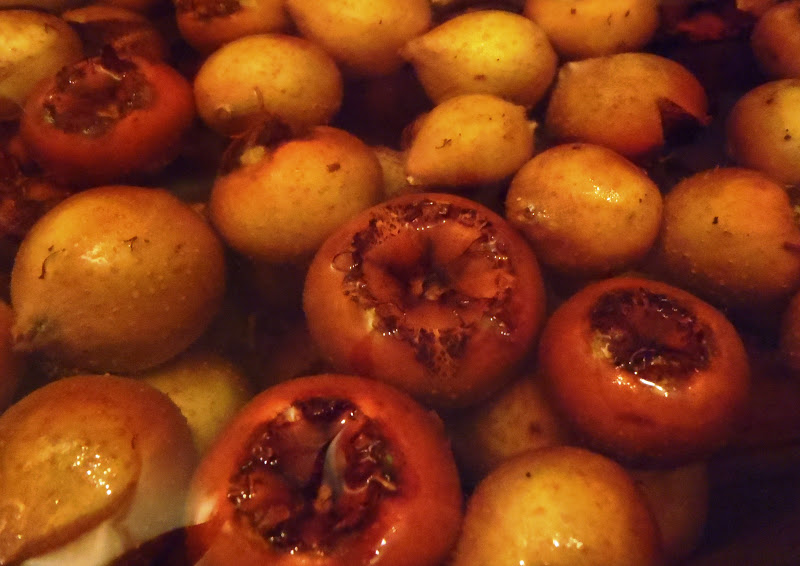
When I initially sliced the medlars and put them into my bucket, I was not at all sure that things would turn out well. This was at least in part because these curious fruits are not especially pleasing to the eye but also the smell reminded me of tasting a freshly picked one; YUCK!
However, after 5 days soaking in water with half the sugar added, the juice smelt quite tasty; although it still looked distinctly unappealing. I skimmed off the brown fruit pulp and then strained the murky liquid through a jelly bag.
The resultant juice now magically changed colour, turning a soft pastel yellow. In the interest of science, I tasted some - it was pearesque and quite delicious; I swear you could have bottled and sold it just as it was.
I was here to make wine though, so I added the remaining sugar and the yeast and decanted it into a demijohn. Within a couple of hours the pale and interesting medlar wine was bubbling away enthusiastically next to the unpretentious crab apple.

Sunday, 4 November 2012

Medlar Wine Experiment

Last year a friend of ours gave us a delicious jar of claret-coloured Medlar Jelly, which was a big hit, especially with my daughter. This year I discovered a medlar tree in the University grounds, it is likely the same one that the jam originated from. I waited for a suitably sinister, cold and dank autumnal evening and furtively picked a big bagfull of the fruits and stored them in my laboratory until they were bletted.
After collecting these old English fruits, you need to leave them to blet, which as far as I can work out means to ripen, ferment or even rot. In the interest of medical science, I tested a fresh medlar and can confirm that it is dry enough to grow a fresh layer of skin over your teeth. Bletted produce on the other hand can be described succinctly as tasting "somewhat apple-ish/pear-ish with a hint of almost-cinnamon-like spice, perhaps".
I decided that it would be an entertaining experiment to attempt medlar wine this year, I uncovered a couple of articles and whittled them down to (what I guessed was) their vital parts and then, made up my own recipe.
Recipe
Ingredients:
·         8 lb. Medlars
·         2.5 lbs sugar (you can add half and half honey)
·         Pectin enzyme
·         Water up to 1 gallon
·         1/2 pint strong black tea (or 1lb of chopped raisins) for tannin
·         Campden tablet
·         Wine yeast
Method:
1.       Wash and crush the ripe medlars, place the fruit in a fermentation bucket.
2.       Add 1 lb. of sugar and the chopped raisins or tea.  
3.       Boil half the water and pour over the mixture, making sure the sugar is dissolved, then add an equal quantity of cold water.
4.       Add the campden tablet and pectin enzyme.
5.       Cover closely and leave for three- five days in a warm place, stirring daily.
6.       Strain through a fine sieve (do not press) add the rest of the sugar; a rule of thumb with country wine is, only add as much sugar as you need to reach an SG of 1.080 – 1.085 and that will almost guarantee a dry ferment at 12%.
7.       Add the wine yeast, put the mixture into a demijohn and fit an airlock to seal the jar.
8.       Store in a warm place and allow the fermentation to work.
9.       When fermentation has ceased, rack the wine into a clean jar and place in a cooler environment and leave. When the wine is clear and stable, siphon into bottles.
I will let you know how my science experiment goes in a later post; I hope it turns a claret red...